Dependency vs Control

If a PC or smartphone is like a vehicle, then AI can be understood as the engine that powers it. Modern AI systems are highly capable, and in many cases, they resemble high-performance engines. However, no matter how advanced the engine is, performance depends on how it is used. Without proper control, even the most powerful system cannot deliver its full potential.
Dependency on AI occurs when users rely on outputs without understanding how they are generated. In this mode, AI becomes a black box. Users accept results as they are, without questioning structure, context, or alignment with the original objective. This approach may produce quick answers, but it often leads to inconsistency, misinterpretation, and reduced precision.
Control, by contrast, begins with understanding. Users must first recognize what AI systems can do, how they respond to different inputs, and how context influences behavior. This awareness transforms interaction from passive consumption into active direction.
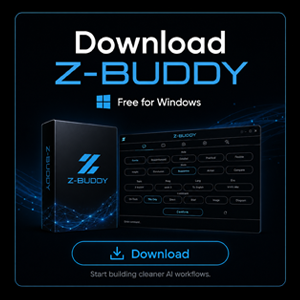
Z-BUDDY is designed to support this shift. It provides a categorized environment where Role, Mode, and contextual conditions can be adjusted through simple controls. By switching a single parameter, users can immediately observe how the AI response changes. This direct feedback loop is essential for learning how to guide AI effectively.
Through repeated interaction, users begin to understand the relationship between input and output. They see how structure, intent, and constraints shape the response. This process builds control step by step, allowing users to move beyond dependency.
The goal is not to replace AI intelligence, but to direct it. Just as a skilled driver brings out the best performance from a high-end vehicle, a user who understands control can unlock the full capability of AI.
Z-BUDDY is built on this philosophy: the highest performance is achieved not by the engine alone, but by the ability to control it.